
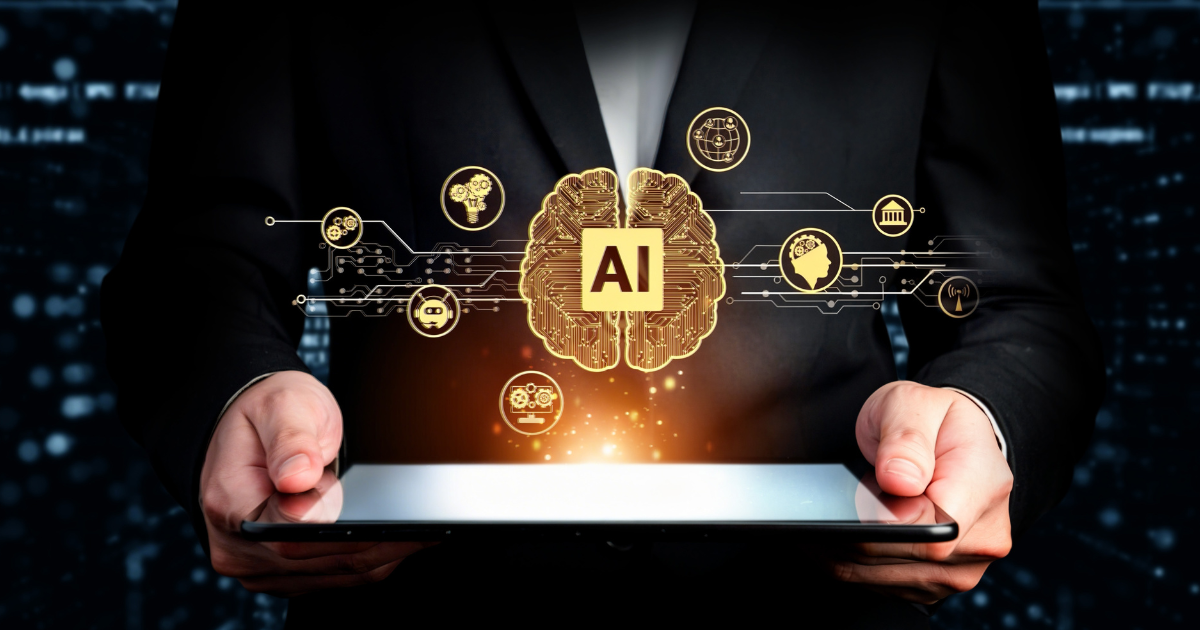
How AI is learning to see, hear, and understand the world just like humans do.
Think about how you understand the world around you. You don’t just read text, you look at images, listen to sounds, watch videos, and make sense of all of it together. Your brain processes multiple types of information at the same time, and that’s what makes human intelligence so powerful.
For a long time, AI couldn’t do this. Most AI systems were designed to handle just one thing either text, or images, or speech. But that’s changing fast. Welcome to the age of Multimodal AI.
In this blog, we’ll break down what multimodal AI is, why it matters, how it works, where it’s being used today, and what the future looks like. Whether you’re a tech enthusiast, a business owner, or just curious, this guide is for you.
What Is Multimodal AI?
The word “multimodal” simply means “multiple modes.” In AI, a “mode” refers to a type of data or input like text, images, audio, video, or even sensor data.
So, Multimodal AI is an artificial intelligence system that can process, understand, and generate more than one type of data at the same time.
Here’s a simple comparison:
- Traditional AI: You type a question → AI gives a text answer.
- Multimodal AI: You show a photo and ask a question about it → AI looks at the image and understands your text → gives a smart, combined answer.
Real-world example: You take a picture of a broken engine part and ask, “What’s wrong with this?” A multimodal AI can look at the image and understand your question together then tell you exactly what the problem is. That’s something a text-only AI simply cannot do.
Why Is Multimodal AI Such a Big Deal?
The world doesn’t communicate in just one format. Humans naturally combine words, visuals, gestures, and sounds to share ideas. Until recently, AI was limited, it could only process information in isolated lanes.
Multimodal AI breaks those walls. It opens the door to AI systems that are far more capable, more natural to interact with, and more useful in real life. Here’s why that matters so much:
1. It Mirrors Human Intelligence
Humans understand the world through multiple senses. Multimodal AI tries to replicate that. When an AI can see, read, and listen at the same time, it becomes much better at understanding context, nuance, and meaning.
2. It Solves Problems That Text-Only AI Cannot
Imagine a doctor trying to describe a tumor in words versus an AI that can look at a scan. Visual data carries information that text alone can never capture. Multimodal AI gives machines the ability to work with richer, more complete data.
3. It Makes AI More Accessible
Not everyone communicates through text. Voice assistants, sign language recognition, image-based search, multimodal AI makes technology more inclusive and easier to use for everyone, regardless of language or ability.
4. It Powers the Next Generation of Products
From self-driving cars to AI tutors to smart home devices, the most exciting technology being built today relies on multimodal AI. It’s not just a research topic. It’s actively shaping the products you’ll use in the next few years.
How Does Multimodal AI Work?
You don’t need a computer science degree to understand this. Let’s keep it simple.
At its core, multimodal AI uses specialised “encoders” and think of them as translators that convert each type of data (text, image, audio) into a common language that the AI can understand. Once everything is in the same format, the AI can work with all the inputs together.
The basic process looks like this:
- Input Collection: The AI receives different types of data, maybe a photo, a voice message, and a typed question.
- Encoding: Each input is processed by a specialised module. A vision encoder handles the image. A speech encoder handles audio. A language encoder handles text.
- Fusion: The AI combines all the encoded information into a unified representation. This is the most technically complex part figuring out how different types of data relate to each other.
- Output: Based on the combined understanding, the AI generates a response which could be text, an image, speech, or even an action.
Modern multimodal models like GPT-4o from OpenAI and Gemini from Google are trained on massive datasets containing text, images, audio, and video together. The more data they see, the better they get at understanding connections between different types of information.
Types of Modalities in Multimodal AI
Different AI systems work with different combinations of input types. Here’s a quick breakdown of the most common ones:
Text + Image (Vision-Language Models)
These are the most common today. Models like GPT-4o and Claude can read text and look at images simultaneously. They can describe photos, answer questions about visuals, read documents, interpret charts, and more.
Text + Audio (Speech-Language Models)
These systems can transcribe spoken words, understand tone and emotion in voice, and generate speech from text. OpenAI’s Whisper and voice-enabled AI assistants fall into this category.
Text + Video
A step up from images, video adds the dimension of time. AI models that work with video can understand movement, actions, sequences of events, and temporal context.
Text + Code
Some models specialise in understanding both natural language and programming code, enabling them to write, debug, and explain software.
Sensor Data + Other Modalities
In robotics and industrial AI, sensor data (temperature, pressure, motion) is combined with visual and textual inputs for autonomous decision-making.
Top Multimodal AI Models You Should Know About
The race for multimodal AI leadership is fierce. Here are the major players shaping this space:
- GPT-4o (OpenAI): Handles text, images, and audio in real time. Currently one of the most capable multimodal models available to the public.
- Gemini (Google DeepMind): Built natively multimodal from the ground up. Designed to understand and reason across text, images, video, audio, and code.
- Claude (Anthropic): Strong in text and vision tasks, with a focus on safety, accuracy, and nuanced understanding.
- LLaVA and other open-source models: The open-source community is actively building multimodal models that anyone can use, customize, or improve.
- Stable Diffusion + CLIP: Powerful for image generation and understanding, widely used in creative AI tools.
The Challenges of Building Multimodal AI
With all this potential, you might wonder if multimodal AI is so great, why isn’t it everywhere already? The truth is, building it is hard. Here are the main challenges developers and researchers face:
Data Alignment
Training multimodal AI requires datasets where different types of inputs are perfectly matched like a photo with its correct text description. Building these paired datasets at scale is expensive and time-consuming.
Computational Cost
Processing multiple types of data simultaneously requires enormous computing power. Running these models can be slow and costly, especially for real-time applications.
Hallucinations and Errors
Multimodal AI can sometimes misinterpret what it sees or hears, generating confident but wrong answers. This is a major concern in high-stakes fields like healthcare or law.
Privacy and Ethics
When AI can see and hear everything, questions about privacy become critical. Who owns the data? How is it stored? Can it be misused? These are ongoing debates without easy answers.
Bias Across Modalities
AI systems can inherit biases from their training data. In multimodal AI, this risk is multiplied, biases can come from text, images, audio, and their interactions.
The Future of Multimodal AI: What’s Coming Next?
We’re still in the early stages. The next 5 to 10 years are expected to bring massive leaps in how multimodal AI works and what it can do. Here’s what experts are predicting:
- Any-to-Any Models: Future AI systems will be able to take any type of input and generate any type of output, text to video, image to music, speech to 3D model. The barriers between modalities will essentially disappear.
- Embodied AI: Robots and physical agents powered by multimodal AI will operate in the real world understanding their environment through cameras, microphones, and sensors, and interacting naturally with humans.
- Real-Time Multimodal Understanding: Models will process live video, speech, and text simultaneously with minimal delay enabling truly real-time AI collaboration in meetings, classrooms, factories, and more.
- Personalised AI Companions: Multimodal AI will power personal assistants that know your voice, recognize your face, understand your habits, and communicate with you the way a human friend would.
- Scientific Discovery: Researchers are already using AI to analyse scientific images, papers, and experimental data together. Multimodal AI could accelerate breakthroughs in medicine, climate science, and materials research.
In short, multimodal AI is not just a feature upgrade. It’s a fundamental shift in what AI can be and what it can do for us.
What Does This Mean for Businesses?
If you run a business, multimodal AI is something you should be paying close attention to not just as a future trend, but as a present opportunity. Here’s why:
- Customer experience will get richer. AI chatbots will evolve into fully immersive assistants that can handle voice, image, and text interactions.
- Marketing will become more dynamic. AI-generated visuals, videos, and copy tailored to specific audiences will reduce production costs dramatically.
- Operational efficiency will improve. Multimodal AI can read documents, check inventory via camera, transcribe calls, and automate workflows across departments.
- Product development will accelerate. Engineers and designers can use AI to analyse product images, prototypes, and feedback, all in one workflow.
- Data insights will deepen. AI that can process visual and audio data alongside business reports will uncover insights that traditional analytics simply miss.
The businesses that start exploring multimodal AI today will have a significant head start when it becomes the standard in just a few years.
Conclusion
Multimodal AI isn’t a distant dream, it’s happening right now. From the way we search the internet to how doctors diagnose patients, from how students learn to how products are built, the ability of AI to see, hear, and understand the world together is changing everything.
We’ve moved past the era of AI that could only read text. Now we’re building AI that can look at the world the way you and I do through multiple senses, in context, with understanding.
That’s the promise of Multimodal AI. And if the last few years are any indication, the pace of progress is only going to accelerate.