

Power Apps Portals make it simple for businesses to connect with customers without heavy technical work. Traditionally, building a system for smooth customer service is challenging. It involves hiring developers, spending time on coding, running multiple testing phases, and planning workflows to collect unbiased feedback. All of this takes time and money.
With Power Apps Portals, businesses can quickly create landing pages or even full websites without needing technical staff. The platform offers ready-to-use templates that can be customized to fit any business need. This means faster development, easier deployment, and no need to start planning from scratch.
What are Power Apps Portals?
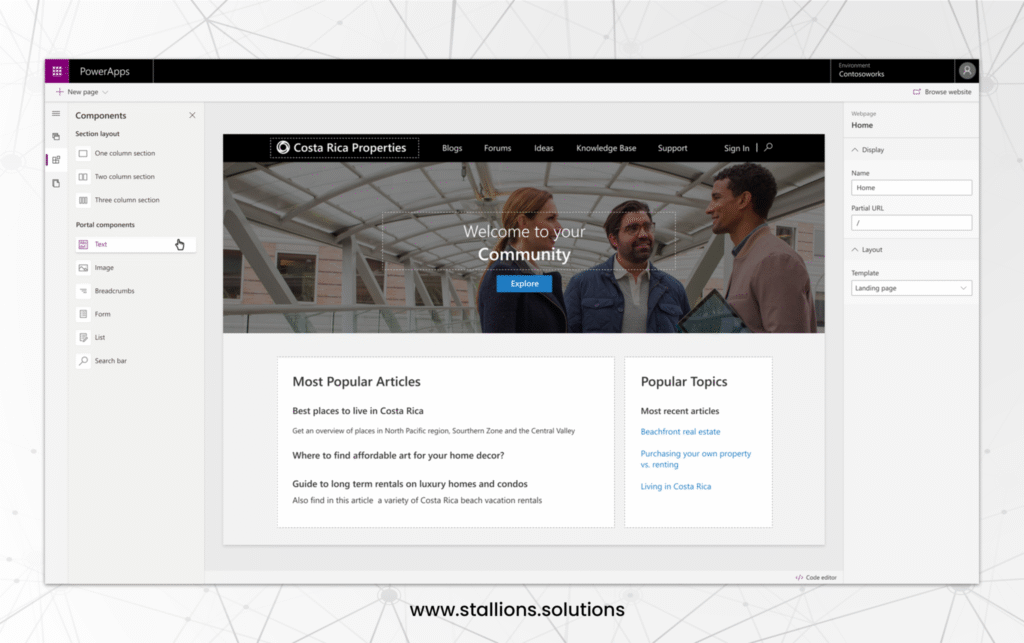
Power Apps Portals make it easy to build landing pages and websites that connect directly with your business data and processes without heavy coding. These pages are fully customizable, so you can match them to your brand. To make things even simpler, Microsoft provides ready-made templates that anyone can use, even without technical skills.
According to Forrester’s Total Economic Impact of PowerApps study, this low-code approach can save businesses 70–80% of the time and cost compared to traditional app development.
How do Power Apps Portals help businesses reach more customers?
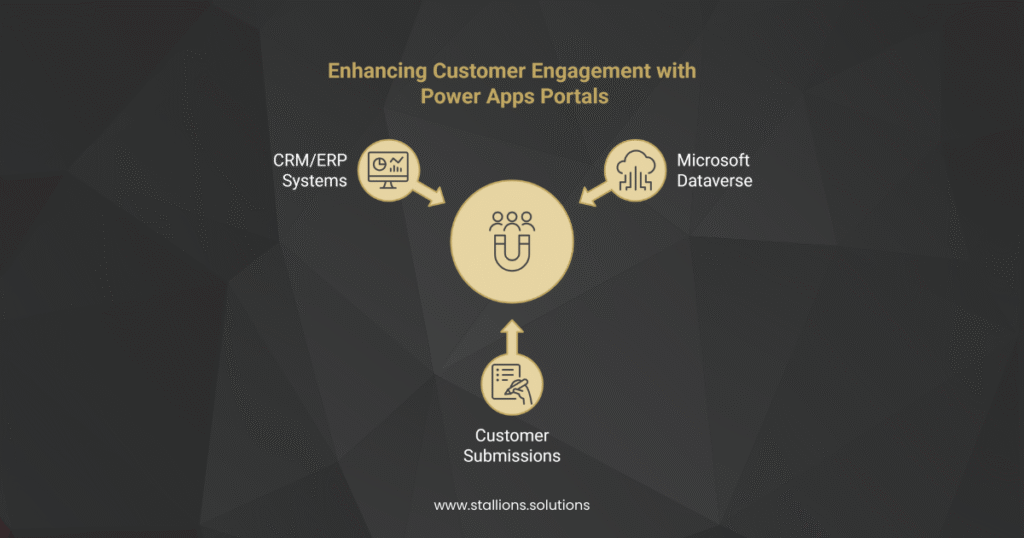
Power Apps Portals connect directly to Microsoft Dataverse, a centralized data platform. This means customers can easily submit requirements, feedback, or complaints straight into your business database. At the same time, your sales or support teams can update orders directly in your CRM or ERP systems, no extra steps needed.
These portals work for both registered and anonymous visitors. New users can sign up using popular accounts like Microsoft, LinkedIn, Google, or Facebook, making the process quick and familiar.
In short, Power Apps Portals expand business reach by streamlining communication, reducing manual work, and giving customers a simple way to interact with your business.
The best way to understand this is through real-world examples so let’s look at some use cases.
Customer Support Portal
With Power Apps Portals, businesses can create dedicated portals where customers can easily submit support requests. They can enter their details, share feedback, and raise issues, all of which flow directly into the company’s main CRM system for quick resolution.
Since these portals connect to Microsoft Dataverse, they can also pull relevant information from the business database to provide self-service options. This means customers can find answers on their own without waiting for support, improving efficiency and satisfaction.
Partner Portal
Modern businesses work with multiple partners, contractors, HR professionals, sales representatives, and more. With Power Apps Portals, you can create a secure platform for seamless communication and data sharing. Partners can submit information, access relevant resources, and receive updates they need to perform their tasks efficiently. All interactions are automatically recorded and integrated into your core business systems, ensuring smooth collaboration.
Document Submission Portal
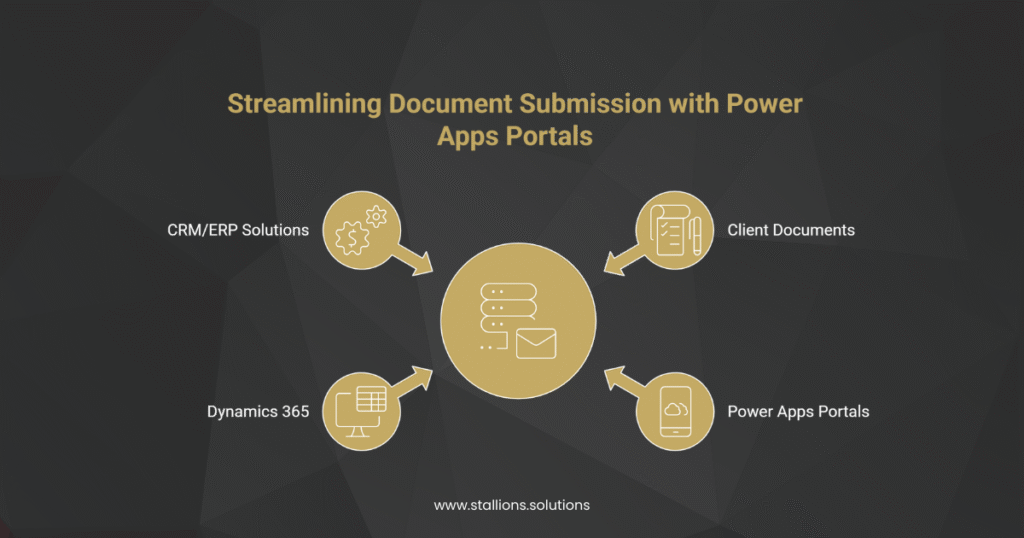
Many businesses require clients to submit documents like IDs, credit details, or loan paperwork. Doing this in person can be slow and inconvenient. Power Apps Portals solve this by allowing customers to upload documents online from anywhere. These files are securely attached and sent directly to your main systems such as Dynamics 365 or any CRM/ERP solution, making the process faster and hassle-free.
Marketing or Registration Forms
Businesses running digital marketing campaigns often need landing pages to collect customer details. With Power Apps Portals, creating these pages is simple even for non-technical users. Thanks to its low-code/no-code design, marketing teams can build landing pages for lead capture, webinars, training sessions, or live events without relying on developers.
Employee or HR Portal
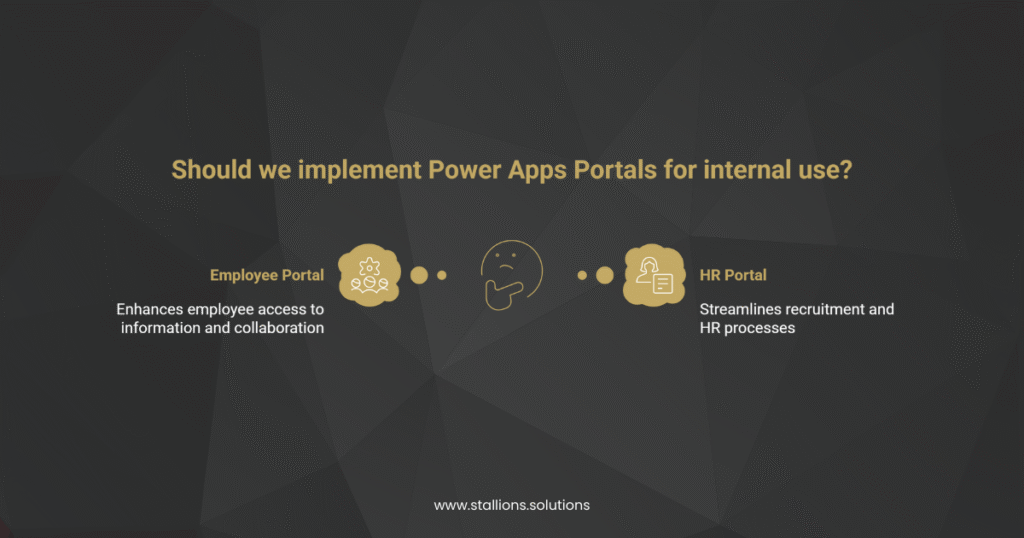
Power Apps Portals aren’t just for customers, they’re great for internal use too. Companies can create portals for employees to access essential information, submit reports, or collaborate on projects. HR teams can also build portals for job applicants to complete online applications, making recruitment faster and more efficient.
Conclusion
A study by Statista shows that 89% of U.S. consumers expect businesses to offer an online self-service portal. With Power Apps Portals, businesses can meet this expectation easily. The platform’s low-code approach empowers anyone even without coding skills to create and deploy portals quickly. This means faster response to customer needs, streamlined processes, and an expanded business reach.