
Artificial Intelligence has crossed an important threshold in 2026. What was once a collection of powerful tools is now evolving into a collaborative workforce, AI agents working alongside humans as analytical partners, automated operators, and trusted decision-support systems. This shift is emerging across enterprises, research labs, and even frontline industries, marking a new chapter where AI is not just used but worked with.
In this blog, we unpack how AI agents are maturing in 2026, why enterprises are accelerating adoption, and what this evolution means for the future of work.
AI Agents Break Out of the Pilot Phase
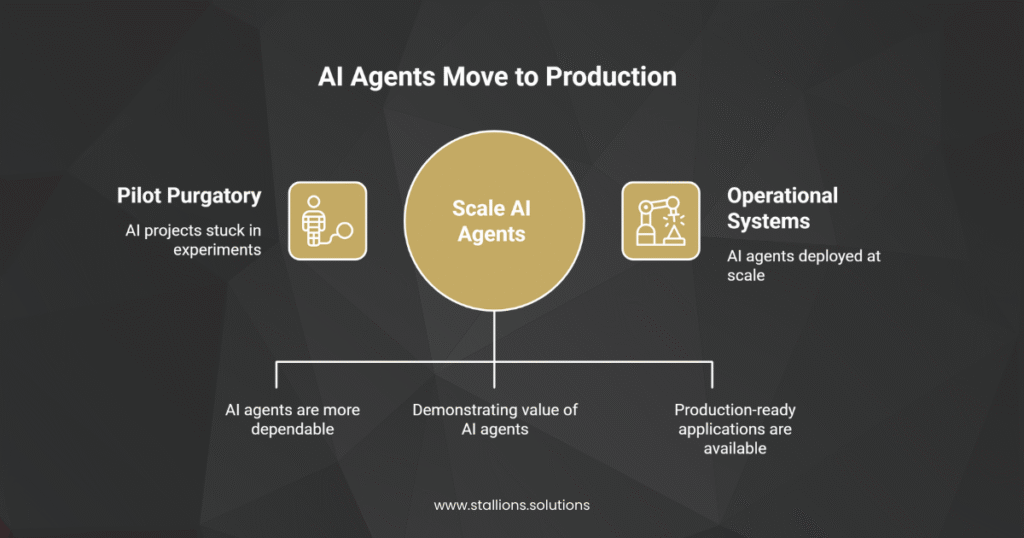
For years, organizations invested heavily in experimental AI projects, often stuck in what experts called “pilot purgatory.” That’s changing fast. Enterprises are finally deploying AI agents at scale thanks to improved reliability, clearer ROI, and expanding production-ready use cases.
Recent survey data shows a clear shift: the number of companies with AI agents deployed in production nearly doubled between August and December 2025, signaling that 2026 is the year organizations finally move from experiments to operational systems.
Why AI Agents Are Becoming Indispensable
1. AI as Digital Coworkers
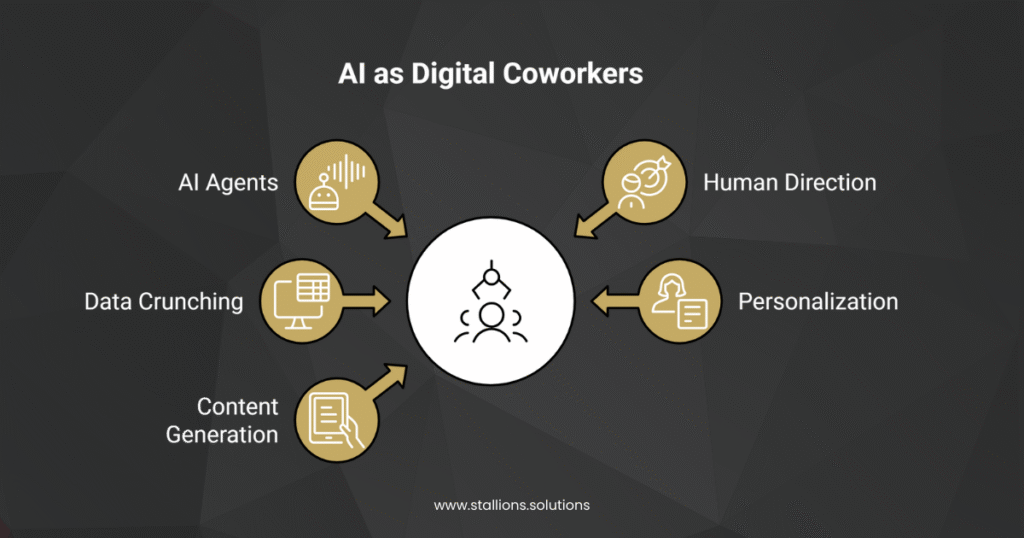
The mindset around AI has shifted dramatically. AI agents are no longer seen as automation scripts—they’re functioning more like coworkers who perform tasks, analyze data, and collaborate with human teams.
Microsoft’s AI leaders describe 2026 as the year where AI evolves from “answering questions” to “amplifying people,” enabling small teams to operate like global enterprises. AI agents take on heavy-lift tasks such as data crunching, personalization, and content generation, while humans provide direction, creativity, and strategy.
2. Production-Scale Reliability
Organizations are now building the infrastructure required to support AI in production: MLOps pipelines, data engineering frameworks, and governance models. This investment is enabling AI to drive real business outcomes instead of isolated proof-of-concepts.
3. A Shift Toward High-ROI Use Cases
Companies are gravitating toward repeatable, measurable AI deployments—chatbots, coding agents, and AI-powered service assistants. These smaller, task-specific deployments offer fast implementation and clear ROI.
Finding Skilled People Is Getting Harder
Enterprise AI adoption has exploded, but talent scarcity remains one of the hardest bottlenecks. High salaries, global talent competition, and massive demand for AI engineers and agent developers are shaping the 2026 hiring landscape. Job postings for AI-related roles grew nearly 1000% in recent years, a trend expected to accelerate as companies scale their AI efforts.
Security: The New First-Class Requirement
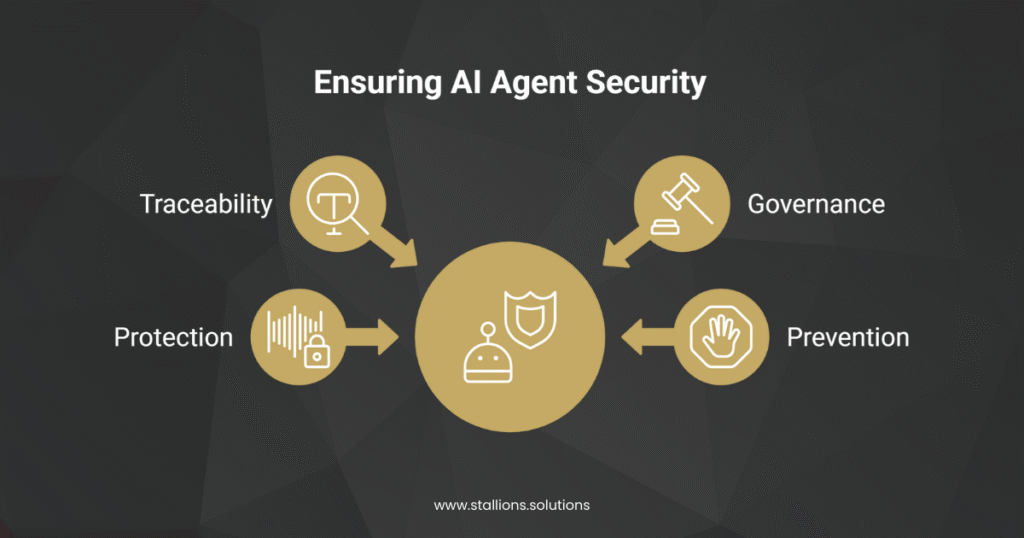
With AI agents taking on more responsibility, security has become a board-level concern. Experts warn that agents must be treated like human employees—with unique identities, limited system permissions, and strict access controls.
AI agents in 2026 must be:
- Traceable
- Governed
- Protected against external interference
- Prevented from becoming “double agents” carrying risk
Organizations are shifting toward ambient, autonomous, built-in security designed specifically for agent-based workflows.
Why 2026 Is a Turning Point
The rise of agentic AI is not just another trend—it marks a structural shift in how enterprises operate. Key forces driving this turning point include:
- Mature cloud and on-prem AI infrastructure that can support real-time reasoning.
- Better data quality and governance, enabling safer deployments.
- Organizational readiness, with leaders pushing for enterprise-wide AI enablement.
- AI-native architectures increasingly built around specialized models and structured data.
AI is no longer an experiment. It’s becoming a core organizational function.
Conclusion: Humans + AI = The New Workforce
2026 represents the beginning of a hybrid workforce era. It’s not about AI replacing humans—it’s about AI enabling individuals and teams to accomplish more than ever before. With AI agents now operational, secure, and ROI-driven, organizations are redesigning workflows and rethinking roles around human–AI collaboration.
The companies that master this shift today will define the competitive landscape of tomorrow.
If you’re writing for a tech audience or developing AI strategy, this year is the moment to watch—and act.