
Generative AI is changing the way businesses work. It uses advanced technology to create new content like text, images, code, and even designs based on patterns it learns from data. This makes processes faster, smarter, and more creative. Let’s look at how different industries are using Generative AI today.
Generative AI Unlocking Creativity and Efficiency for Businesses
Generative AI can create new and realistic content like text, images, audio, and even videos by learning from massive amounts of data. This ability is helping businesses reach new levels of creativity and efficiency.
Companies use Generative AI to:
- Write marketing content that grabs attention.
- Design product prototypes quickly and creatively.
- Deliver personalized customer experiences at scale.
But that’s not all. Generative AI also automates complex tasks and streamlines workflows that used to take hours or even days. This means businesses save time, cut costs, and focus on innovation.
As adoption grows in today’s data-driven world, businesses are creating more engaging and tailored products and services than ever before. Popular tools like Midjourney, DALL·E 2, Google Bard, and ChatGPT are leading the way.
By 2026, over 100 million people will rely on Generative AI to complete their work, a clear sign that this technology is becoming part of everyday life. Whether you’re a business leader aiming to stay ahead or an individual looking to boost creativity and productivity, Generative AI is leveling the playing field for everyone.
Use Cases for Generative AI – Real-World Applications That Matter
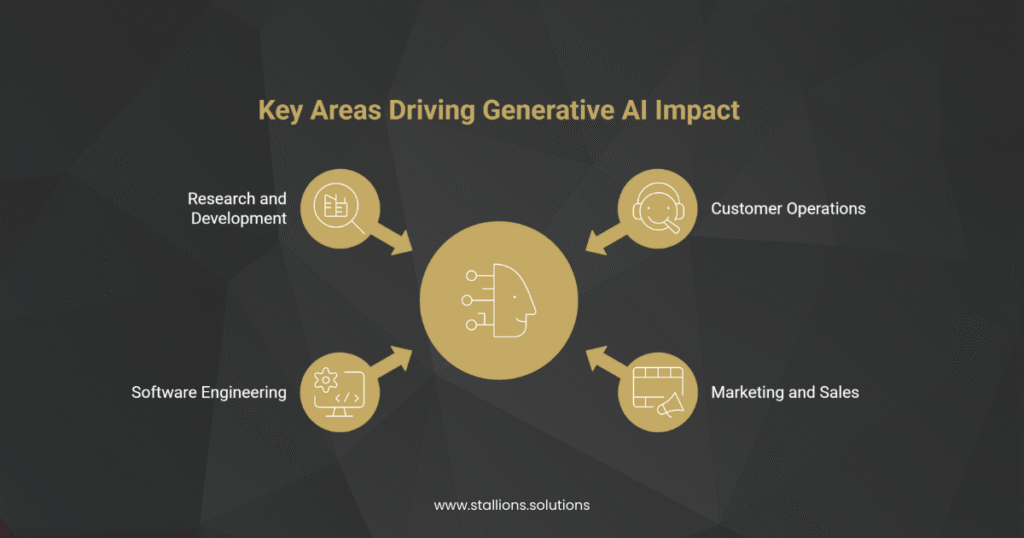
Generative AI is creating real impact across industries, but according to McKinsey, most of its value comes from just a few key areas. After analyzing 16 business functions, they found that four main areas that are customer operations, marketing and sales, software engineering, and research and development, and could deliver about 75% of the total annual impact from Generative AI use cases.
What does this mean for businesses?
- Customer Operations: AI-powered chatbots and virtual assistants improve customer support and reduce response times.
- Marketing and Sales: Generative AI creates personalized campaigns, product descriptions, and ad content at scale.
- Software Engineering: Automates code generation, testing, and bug fixing to speed up development.
- Research and Development: Accelerates innovation by generating design ideas, simulating prototypes, and analyzing large datasets.
These areas show where businesses can get the biggest return on investment by adopting Generative AI.
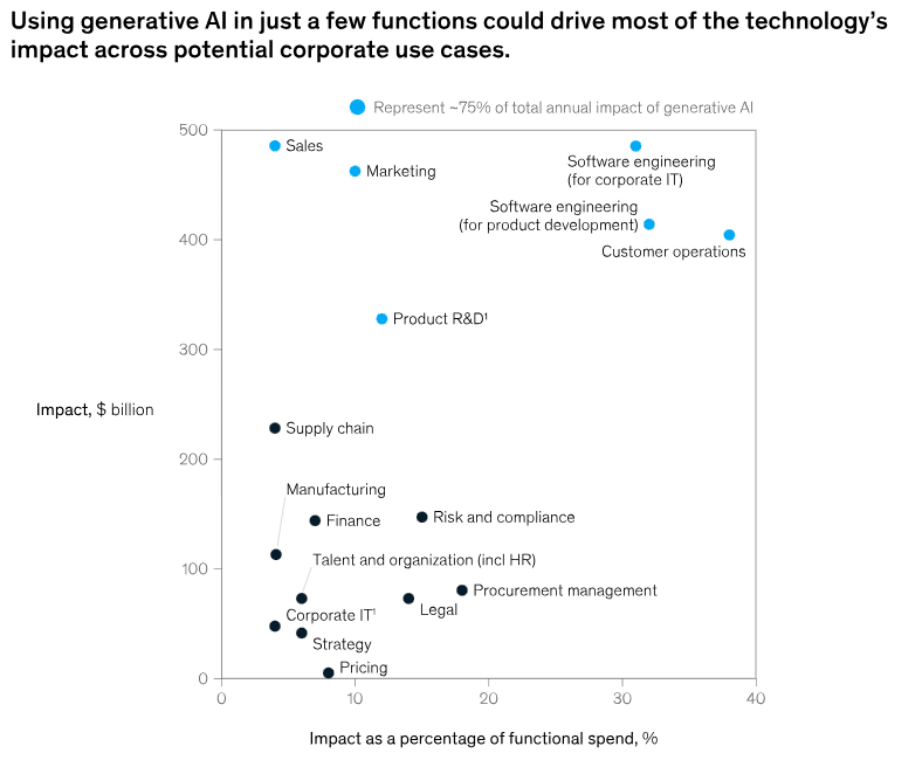
Generative AI is redefining the way we think, create, and work. From helping developers write better code to transforming customer support, its applications are practical and powerful. Let’s look at four major use cases.
Coding Assistance for Developers
Generative AI makes software development faster, smarter, and more creative. Acting like an intelligent coding assistant, it helps developers:
- Generate code snippets instantly.
- Optimize existing code for better performance.
- Debug errors in real time.
Key benefits
- Enhanced productivity by automating repetitive tasks and reducing errors.
- Faster development cycles from idea to working code.
- Improved code quality using AI models that suggest cleaner, more efficient solutions.
Customer Support on Demand
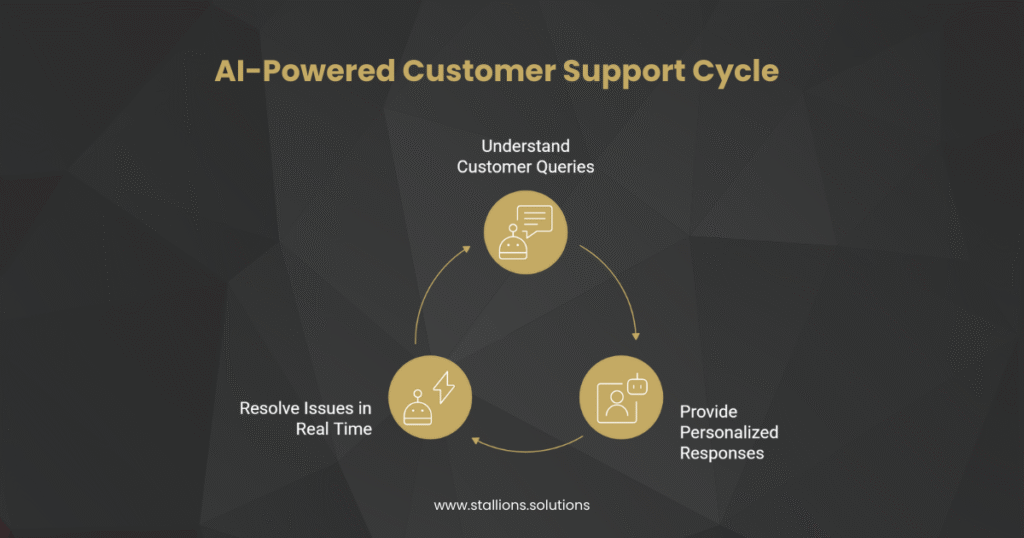
Generative AI is turning customer support into an always-available, instant problem-solving system. AI-powered chatbots and virtual assistants:
- Understand customer queries.
- Provide quick, personalized responses.
- Resolve issues in real time.
Key benefits
- 24/7 service without downtime.
- Lower costs by automating repetitive tasks.
- Better customer satisfaction through faster resolutions and personalized interactions.
For businesses, this means happier customers and reduced operational costs. AI-powered support feels natural and engaging, making virtual assistance almost human-like.
Next-Level Market Intelligence
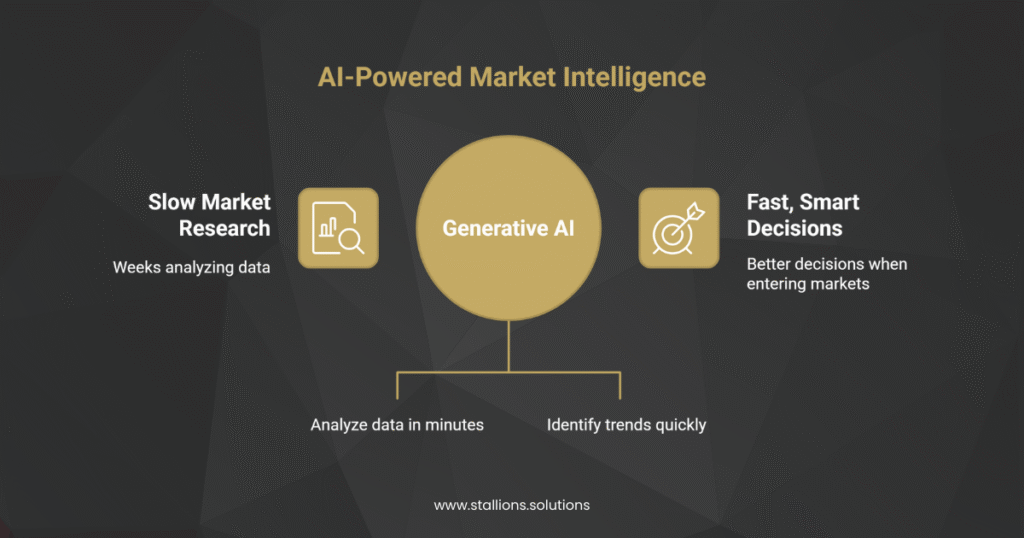
Generative AI is making market research faster and smarter. Instead of spending weeks analyzing data, businesses can now process huge datasets in minutes and uncover hidden trends. This helps companies make better decisions when entering new markets.
Key benefits
- Rapid market research – Spot trends much faster than traditional methods.
- Actionable insights – Turn raw data into clear strategies.
- Cost efficiency – Save money by reducing manual research and analysis.
Content Generation
One of the most popular uses of Generative AI is creating content. Businesses need high-quality, engaging content more than ever, and AI makes this easy. With advanced language models, Generative AI can write blogs, social media posts, ads, and more quickly and at scale.
Key benefits
- Audience alignment – Create content that matches customer preferences.
- Scalable creativity – Produce marketing materials in minutes.
- Marketing efficiency – Improve targeting and ROI by generating personalized content.
Final Words
Generative AI is more than just a trend, it’s a game-changer for businesses and individuals alike. From creating content to improving customer support and speeding up software development, its applications are practical and powerful. Companies are using it to save time, cut costs, and deliver better experiences to customers. Popular tools like ChatGPT, Midjourney, and DALL·E 2 are already making this technology accessible to everyone. As adoption grows, Generative AI will continue to unlock creativity and efficiency across industries. It helps businesses make smarter decisions, innovate faster, and stay competitive in a digital-first world. By 2026, millions of people will rely on Generative AI for work, showing how deeply it will shape our future. Whether you’re a business leader or a creative professional, now is the time to embrace this technology. Generative AI is not just shaping the future, it’s creating it.